Monday, 30 March 2020

Behind the Scenes at Attingham Park


Holly Kirby, a National Trust curator at Attingham Park, has kindly explained what essential work is currently being done in the House during the Covid-19 closures. Usually, the Easter period is a very busy one at Attingham Park, but at the moment Holly works alone in large empty rooms protecting the textiles. 
Here is Holly in a 'selfie' taken in the Sultana Room at Attingham Park

This is what Holly’s working life is like at the moment:

We have been cutting down on the number of staff in on any one day and working a distance apart to minimise the risk of the virus spreading. We are fortunate that Attingham is large enough that we can easily find separate areas to work in! My typical week involves 2-3 days taking care of the collection at Attingham and the rest of my work is done from home.
T
The closed Drawing-Room

We are working through each room giving the items a deep clean and condition check. We do things like vacuuming textiles, waxing furniture and dusting paintings from the orange scaffolding you can see in the Picture Gallery photo.
The Picture Gallery

Then we cover each item to protect it from dust whilst we are closed. It brought back memories getting out the gingham dust sheets and making acid-free paper ‘hats’ to cover collection items. Last time we did this was in 2012. As we’ve been open longer in winter it hasn’t been necessary to close the house down properly for a while. Many of the gingham covers have been specially shaped to fit specific items of furniture and when they’re in place it looks like everything has been spread with jolly picnic cloths! 

The Dining Room table looks spooky with items covered in white paper – it reminds me of Miss Havisham’s wedding feast!
The dining-room looking like Miss Havisham's wedding feast

We would like to thank Holly for kindly sending the account of her working day along with these wonderful photos. I'm sure that you all, like us, can't wait to be able to visit National Trust properties again.

Thursday, 5 March 2020

Hidden Stories from a Costume Collection: Revealing Historical Treasures at Wrexham Museum, 29th February 2020


There was considerable excitement at Wrexham Museum on 29th February 2020 when people gathered for a unique occasion. The purpose of the event was to reveal some of the costumes which had been bequeathed to the museum in the 1980s but which had never been on display. Hidden Stories from a Costume Collection’ was co-organised by Professor Deborah Wynne, Wrexham Museum and the costumier and fashion designer Ruth Caswell.  The day began with Deborah interviewing Ruth about her long career as a designer and costumier, focusing on her work in Vogue and the costumes she created for the films Elizabeth, Elizabeth: the Golden Age, and Shakespeare in Love, as well as her current work running masterclasses for young students interested in a career in textiles and fashion.
Ruth Caswell being interviewed by Deborah
Ruth created the costume worn by the Duke of Anjou (above) in the film Elizabeth (1998)
Ruth made this costume worn by Eric Cantona in the film Elizabeth
The 'bird dress' designed and made by Ruth. 
This featured in Vogue in December 1971, photographed by Norman Parkinson. It was voted 'Fashion Photograph of the Year', 1971.

After the interview, Ruth opened the first storage box to reveal one of the costumes, which we named 'the governess dress'. It resembled the gowns worn by Charlotte Brontë in the 1840s. 
Photo:Wrexham Museum
As the box lid was lifted, one participant exclaimed, 'It's just like Christmas!'

Photo:Wrexham Museum
Ruth, assisted by her daughter Amy, mounted the 'governess dress' and it was brought to life.
The next garment, a late-Victorian gown with a bustle, made from a beautiful dark purple velvet, was revealed and we all were able to see the complicated structure inside the bodice. Ruth explained how the dress was constructed and, from the label, that it was made in Chester.
Ruth and Amy set about bringing this dress to life by mounting it on the dummy and showing the complexity of the details, such as the buttons and the magnificent bustle.
Photo:Wrexham Museum
This is the third dress to be revealed, and participants were able to get up close to examine the detail of the fabric and the ways in which it had been altered to fit different wearers.
Ruth was inspired by George Richmond's portrait of Charlotte Brontë depicting her wearing a ribbon at the neck of her dress. Ruth recreated this effect on the 'governess dress'.
George Richmond's portrait of Charlotte Brontë 
Ruth revealing how undergarments are important to the shape & fitting of the dress.
All three dresses displayed.

Feedback from participants was very positive. Here are a few sample comments:
  •         ‘Another inspiring and informative textile day. So many aspects in design, construction, dyes, stories. Thank you.’
  •     ‘INSPIRTIONAL! A fascinating and informative day and to see such a wonderful collection up close and with Ruth whose knowledge is phenomenal. I loved it and to have it in Wrexham. Thank you.’
  •      ‘It has been an absolute privilege today to be part of this costume story! The whole unfolded with professional grace as Ruth broke us into the subject so well – sharing the rich textile career she has enjoyed and is enjoying! Ending on the subject of the museum costumes was a perfect lead into the museum’s costume collection. It was so natural but carried us on an informed story of each dress. Thank you all!’

Ruth's masterclasses inspire a younger generation to consider careers in fashion and costume design.


Wednesday, 18 December 2019

The English Banner at University Centre Shrewsbury

By Professor Deborah Wynne


The English programme at UCS began in 2015 and developed from strength to strength over the next few years.  As programme leader at the time, I wondered how we could find a way of celebrating the wonderful experience of studying literature next to the banks of the River Severn and close to Charles Darwin's childhood home.  I'd been involved in a community quilt project before, but only as an observer, rather than a participant.  I thought it would be a challenge for me, my colleagues, and the students on the programme to create a large textile banner as a permanent memorial of our first years of working and studying together.  None of us were expert with the needle but we all were keen to create something which reflected an aspect of ourselves, our love of literature and our appreciation of being in the lovely town of Shrewsbury.  Despite a few qualms about our skills, we all decided to give it a go!


The result is 17 different 'textile stories' which have been expertly brought together in a banner by the virtuoso sewist, Elaine Rowland.  Here are the various stages of her careful construction of disparate textile squares into a beautiful whole:


Finding a possible layout

The blocks are attached to the backing fabric

The completed banner.  Elaine kindly created a centrepiece which helps explain the rationale for this banner:

Elaine created an image of books and a mug sewn onto a piece of fabric with piles of books in the background.  In the finished version she added the words 'University Centre Shrewsbury' in gold thread to the spine of the red book.

We held a special 'unveiling' event on 31st October 2019 to celebrate this symbol of our sense of community:

Deborah Wynne and Elaine Rowland holding the finished banner.


Philip Jones decided to create a block based on the texts he's enjoyed studying.  He said, 'This quilt square represents three years of studying literature and young adult fiction in the most wonderful of company.  Depicting: the time-keeping rabbit from Alice's Adventures in Wonderland to keep us punctual, the fruits of our labour from 'Goblin Market', symbols from the Gothic novels that we remember, and the treasure from Treasure island, to symbolise the prosperity desired for everyone, and all enclosed within the House colours of Harry Potter to make the magic happen.'


Medeni Evens created an image of the Guildhall and St Chad's Church in Shrewsbury, with a daffodil representing Wales, where she lived.

other contributors explained the stories behind their blocks.  Naomi Walker said, 'My square represents a map of Shrewsbury as PhD thesis is about the two Shropshire writers, Mary Cholmondeley and mary Webb, and how place is represented in their writing.  I use G.I.S. mapping in my research and I wanted to demonstrate the importance of maps in my textile square.'


Dr Giulia Miller, who teaches literature and film at UCS, said that her 'square represents a particularly busy but wonderful term, when I was commuting several times a week, taking both the bus and the train.  One morning, whilst on the bus, I spotted an owl and was very excited.  my daughter Noa was also excited and loves arts and crafts, hence her contribution.'

Student Chloe Norton explains, 'My quilt square is a simple 'tribute' to the novels that fully sparked commy love for literature - The Hunger Games series.  The mockingjay is a symbol of change, reflecting my journey through 3 years of studying and onto the next chapter of life.'  Andie MacDonald, who graduated in 2019, said that 'This vibrant red tartan reflects my proud Scottish heritage, and represents the bloodshed of the MacDonald clan at Glencoe from the murderous scunne Campbell.  The font is ironic; McDonald's restaurants use the same font and name is constantly misspelled!  The peace sign is ubiquitous and timeless.'

Dr Lucy Andrew, the current English programme leader, has created a block reflecting her research interests in Harry Potter, while I created a pile of books by the nineteenth-century authors I love most, as well as including a bee to reflect the meaning of my name 'Deborah'.

Elaine Rowland has explained her role in the making of the banner on her blog, which you may wish to read: http://blacktulipsewing.blogspot.com/2019/11/the-university-centre-shrewsbury-banner.html

Many thanks to Elaine for all her hard work and for letting me use her photographs for this blog post.


Wednesday, 11 December 2019

Hidden Stories from a Costume Collection

Wrexham County Borough Museum and Archives with the University of Chester Department of English announce their event - Hidden Stories from a Costume Collection, to take place Saturday 29th February 2020, 11.30am to 3.30pm. The cost of this event is £20.00 including lunch.  To book a place contact Wrexham Museum on 01978 297460 or a museum@wrexham.gov.uk


Wednesday, 11 September 2019

The Missing Shoe

The Missing Shoe

Inspired by the Textile Collection at the Foundling Museum, London

By Kath O'Gallivan


Her mother gone, her Mistress dead and the Master away to war.


She, in her 13th year has a secret to keep, hidden beneath her stained apron.


A kitchen maid smooring the fire, the goose wing scattering embers, sending soot specks flying.


Back aching.


Head spinning.


A weight pressing.


She is sick.


Cook feeds her a milk posset and camomile tea sweetened with honey.  Brings her linen strips to bind her belly.


She bruises rosemary pressed into her pocket.  Feels a heart shaped shell folding it in her hand.


The pantry store has laden shelves.  Full sacks and empty kegs, stacked crates, heavy basins and demi johns, all jostle for space.


In here she finds her safe place.


She lies on a cot strewn with lavender sprigs and meadow sweet.  Soft layered ticking comforts her and she falls into a busy sleep.


The candles burn sage.


Through the slats garden birds sing.


She labours through the night.  Cook waits, brings rosemary oil to stretch her skin.  Her body ripples, writhing in pain.


Her daughter is born in a rush of dawn chorus.


Cook busy with hot water and muslin, swaddles the child in scrim and pudding cloth.


Wrapped tight, secure in a tea towel the child cries, then settles, suckles, strong and persistent.


All three are content in the smell of warm milk.


The new mother and child sleep, their breathing shared.


Dark brings the night owl screeching.


Blackbird's morning song arrives with pale sunshine touching their sleeping shape.


Cook gives her beef broth, raspberry leaf tea and cabbage leaves for her swollen breasts.


Days of feeding and listening to bird lullabies, cocooned together happy inside each other.


For the journey the Cook offers a cotton-sprig dress, heavy and full gathered with pleating.


The daughter is given tiny silk shoes taken from the nursery for her tiny perfect toes.


Her small body swaddled, wrapped in a fine linen table cloth, corners folded and embossed.  A muslin square anoints her crown.  The cook's soft woolen shawl protects and conceals.


A child with child pretending.


It is time.


The new mother walks slowly, boots tight, feet dragging scattering the pigeons over the cobbles.


The crows caw in the field.


Gulls screech along the river path.


She finds a magpie feather, rests on a stone wall watching the finches feasting on thistle heads.


Her daughter feeds hungrily pressing into her breast.


They cry.


She is frightened, clutching, her bundle closer, tighter.


"A scrap of a thing"


Towards the town, swallows are screaming over the chimneys.


The smoke is stinging her eyes.


She opens the gate, steps lightly through the yard and hears the sparrows squabbling in the mulberry trees.


The doorbell, shines.


The Nurse, kind.


The room, waiting.


Her daughter, given.


The silk shoe, missing.


Her heart, splintered.


Her daughters missing shape, remembered.


Her arms a dull emptiness.


The shoe still warm, safe in her pocket.


Her tired feet recall the morning's steps.


Cook feeds her stew and makes Penny Royal tea.


"It's for the best" she says and lights a candle.


The new mother grips the tiny silk shoe in her pocket.


She watches the starlings as they gather the evening in and she draws a line under the day.


Kath O'Gallivan is a textile artist based in Shropshire making research-led pieces with a focus on eclectic techniques and found materials.  Her career as an art teacher began in 1972 and she now researches the archives at the London Foundling Museum.  Her artistic practice includes painting, material manipulation, dyeing, printing, stitching and mixed media application.  She leads mixed media workshops based on her projects, and delivers talks about her work which prioritise a tactile and interactive pedagogy.


Saturday, 25 May 2019

The Textile Stories Study Day 2019: From the Cradle to the Grave - A report by Matilda Walker, aged 15


On 11th May 2019, around fifty people gathered at the University Centre Shrewsbury to hear a variety of interesting talks based upon textiles in relation to various key ceremonies in life. The topics discussed ranged from a medieval trousseau to contemporary film, and spanned many art forms. This was the seventh of such days organised by Professor Deborah Wynne.

            The day commenced with a talk by Sarah Thursfield, a professional pattern-cutter and amateur textile historian, titled ‘The Trousseau of Isabella of France, 1307’, which discussed the various items of clothing that it was made up of and the role of the different textiles available at the time. The audience were also interested by how the clothes were constructed and worn, and Sarah’s amazing display of reconstructed examples helped her to demonstrate this. We were also able to view images from this period in order to understand the role that clothing and textiles played in society.
Isabella of France


Afterwards, Holly Kirby, a National Trust curator, gave a talk about ‘The Costume Collection at Attingham Park: Phases of the 8th Lady Berwick’s Life as Seen Through her Clothing’. The eighth Lady Berwick lived from 1890 to 1972, however this talk mainly focused on her early life as she only left the National Trust with clothes from this time. Teresa Berwick was born in Venice and spent her childhood there with her sister. Attingham’s collection also contains clothes belonging to her sister and mother.
 

Holly Kirby delivering her talk while wearing an authentic dress from the 1890s.

Holly explained that when the First World War broke out, Teresa moved to London for a year and helped in translation due to her language skills. Afterwards, she returned to Italy to work as a war nurse and Holly was able to show us photographs of her from the time, and some of her remaining uniform, which is in the Attingham collection. After the war, she married Lord Berwick in Venice and moved to Attingham Park. We learned of her love of fancy dress and viewed some of her fabulous costumes from this period, which were often inspired by other cultures or time in history. As well as focusing on her clothes, Holly also showed us various portraits of her, painted by her artist friends, and some fabulous photographs which even appeared in Vogue! Following this enthralling talk, the audience were delighted to hear that we could see these outfits in person through a special tour of Attingham Park run by Holly Kirby.

            Following an exciting morning of talks, we all enjoyed a delicious vegan and vegetarian buffet lunch provided by Stop café. This allowed us to discuss the morning with each other and the speakers themselves, before the afternoon’s sessions.

            First in the afternoon was a short story by Dr Lisa Blower, an award-winning novelist and short story writer, written especially for this event. We were very privileged to hear how the theme for our day had inspired the story ‘Tink’, which is a knitting term referring to a way of undoing stitches. She cleverly interweaved the theme of celebratory outfits by recalling how her mother’s woollen wedding dress was then “tinked” to become her and her sister’s Christening gowns.
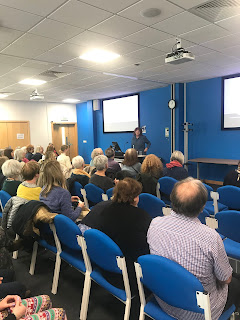
Lisa Blower reading her story ‘Tink’, about unravelling and reknitting lives and wool.


To continue with the theme of celebratory wear in fiction, Amanda Ford discussed funeral wear in Elizabeth Gaskell’s novels, in particular in Mary Barton. We learnt about the life of Elizabeth Gaskell and industrialism in Manchester to provide a background to the book extracts and information about mourning customs at the time. Everyone was shocked by just how long women had to mourn for (13 months) and the etiquette surrounding mourning fabrics. Amanda introduced us to new fabrics, such as aerophane, and the concept of and meaning behind having somebody’s hair in a locket.


Victorian mourning jewellery
                 

The final talk of the day was ‘Four Weddings and a Funeral: Costume and Ceremony in Contemporary Film’ by Dr Guilia Miller, who has published books and articles on film and adaptations. She discussed the role of costume in film and whether it should be designed for the character or actor, before moving on to look at examples. She discussed the role that costume plays in the plot of Gone with the Wind by Victor Flemming (1939), looking in particular at the wedding dress of Scarlett O’Hara (played by Vivien Leigh). For The Philadelphia Story (George Cukor, 1940), Giulia talked about how the famous costume designer, Adrian, used costume to convey character, whilst also designing it with Katherine Hepburn in mind. For this film, we were also able to see the role that costume played in black and white films. 
  Giulia Miller discussing costume design in film


Giulia went on to discuss how costume portrays character in the 1989 film Steel Magnolias directed by Herbert Ross, looking in particular at occasion wear in the wedding and funeral scenes. This film was interesting as the designer, Julie Weiss, chose to ignore the fact that she was dressing stars such as Julia Roberts and Dolly Parton. We then looked at the pastel colour scheme of Marie Antoinette (Sofia Coppola, 2006), which won three awards, including an Oscar, for its costume design by Milena Canonero. Giulia discussed how costume portrayed the character of Marie Antoinette (for example, in the ball scene), whilst also maintaining the film’s aesthetic and themes. We then looked at an example of how costume is used in fantasy films, using The Twilight Saga: Breaking Dawn – Part 1 (Bill Condon, 2011), where it is used to distinguish between the wolves and vampires and suggest character differences between the two. To continue with the theme of celebration wear, Guilia discussed Bella’s wedding dress. To finish, Giulia chose to look at costume in Ken Loach’s 2016 film I, Daniel Blake, which is something that many of the audience had not thought about, as it is intended to reflect the characters and seem as if it is something that they would buy themselves, rather than be chosen by a costume designer. We looked at how each of their individual styles are continued throughout the film and can be seen in their funeral wear.

All in all, it was a very interesting and informative day which was enjoyed by all. We can’t wait until the next Textile Stories Day! The theme for that event will be 'Textiles in Action'.


We would like to thank Matilda for writing this detailed account of the day and also Naomi Walker for taking the photographs reprinted here.